Comparison · Driveways
Concrete vs pavers for a driveway
By Nathan Carter, owner, Gold Coast Concrete Services. Reviewed October 2026.
Quick answer
A concrete driveway is one reinforced slab, so it resists sinking, weeds and loose edges and needs little upkeep. Pavers are individual units on sand, so single pavers can be lifted and replaced, but they can sink, spread and grow weeds over time. On the Gold Coast's sandy and reactive soils, concrete usually lasts longer with less maintenance.
| Concrete | Pavers | |
|---|---|---|
| Structure | One reinforced slab | Individual units on bedding sand |
| Weeds and ants | None through the surface | Can grow and nest in joints |
| Sinking and ruts | Resists, if the base is right | Can rut under car tyres |
| Repairs | Patch, resurface or cut out a section | Lift and relay individual pavers |
| Looks | Plain, coloured, exposed or patterned | Many shapes and colours |
| Upkeep | Reseal decorative finishes every 2–3 years | Re-sand joints, weed and seal |
How each is built
A concrete driveway is poured as a continuous slab over compacted road base, with steel mesh inside and saw-cut joints to control cracking. Once it cures, the whole driveway works as one piece.
A paved driveway is made of separate concrete or clay pavers laid on a bed of sand over road base, with sand swept into the joints. The edges are held by a concrete edge restraint. Each paver can move a little on its own.
Strength and sinking
Both can carry cars when built properly. The difference shows over time. Because pavers sit on sand, the repeated turning of car tyres can push them down into ruts, and water getting into the joints can wash bedding sand away.
A concrete slab spreads the load across a much wider area, so it is less likely to sink in one spot. That matters on the Gold Coast, where many blocks have sandy fill near the coast or reactive clay in the hinterland.
Weeds, ants and maintenance
Paver joints collect dirt, seeds and ants, especially in our humid summers. Keeping a paved driveway tidy means weeding, re-sanding the joints and resealing.
Concrete has no open joints except the saw cuts, which can be sealed. Decorative concrete is resealed every two to three years. Plain concrete needs little more than an occasional pressure clean.
Repairs
This is where pavers have an advantage. If a paver cracks or a pipe needs digging up, individual pavers can be lifted and relaid.
Concrete repairs are more visible. Small cracks can be sealed, and damaged sections can be saw-cut out and repoured, but matching the colour exactly is hard. Resurfacing can give an older driveway a uniform new finish.
Replacing pavers with concrete
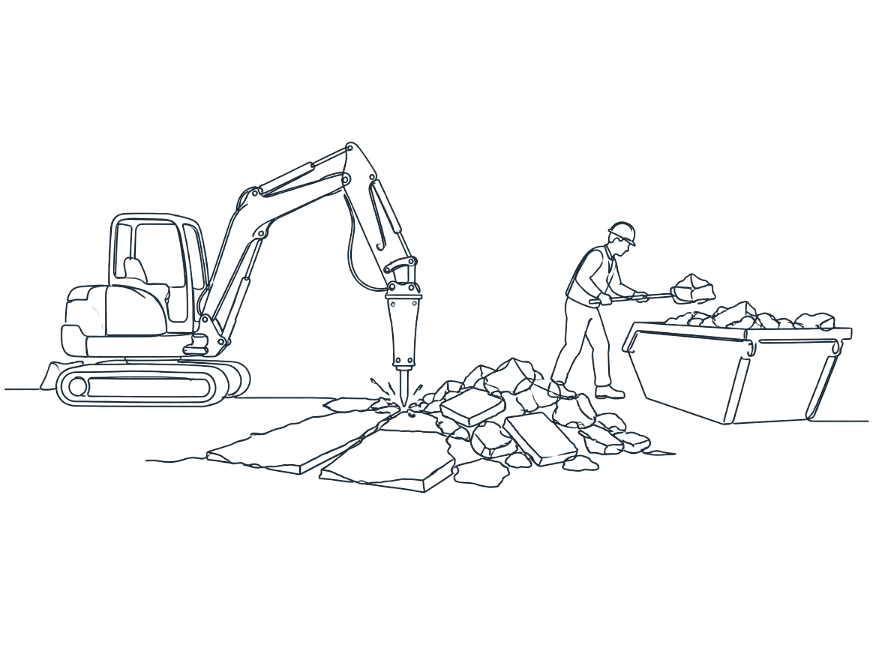
Many of our driveway jobs start with lifting old pavers. We remove the pavers and bedding sand, check the road base underneath, add and compact more where needed, then form, reinforce and pour the new driveway.
If the existing base is sound, reusing it can reduce the work. We check this at the site measure.
Common questions
Can you pour concrete over existing pavers?
No. Pavers move independently on sand, so concrete poured over them would crack. They are lifted first and the base is checked.
Which looks better?
That comes down to taste. Concrete can be coloured, exposed or stencilled to give a pattern, while pavers give genuine individual units and joints.
Is concrete or pavers better near the beach?
Both can work. Concrete should use a mix suited to salt exposure and be sealed. Pavers near the beach need the joints and edge restraint kept in good order so sand doesn’t wash out.
How long does a concrete driveway last?
A well-built concrete driveway can last for decades. The base, thickness, steel and joints matter more than the finish.
More on driveways
- What affects the cost of a concrete driveway?
- Exposed aggregate vs plain concrete
- How thick should a concrete driveway be?
- Driveway crossovers on the Gold Coast
- Concrete Driveways