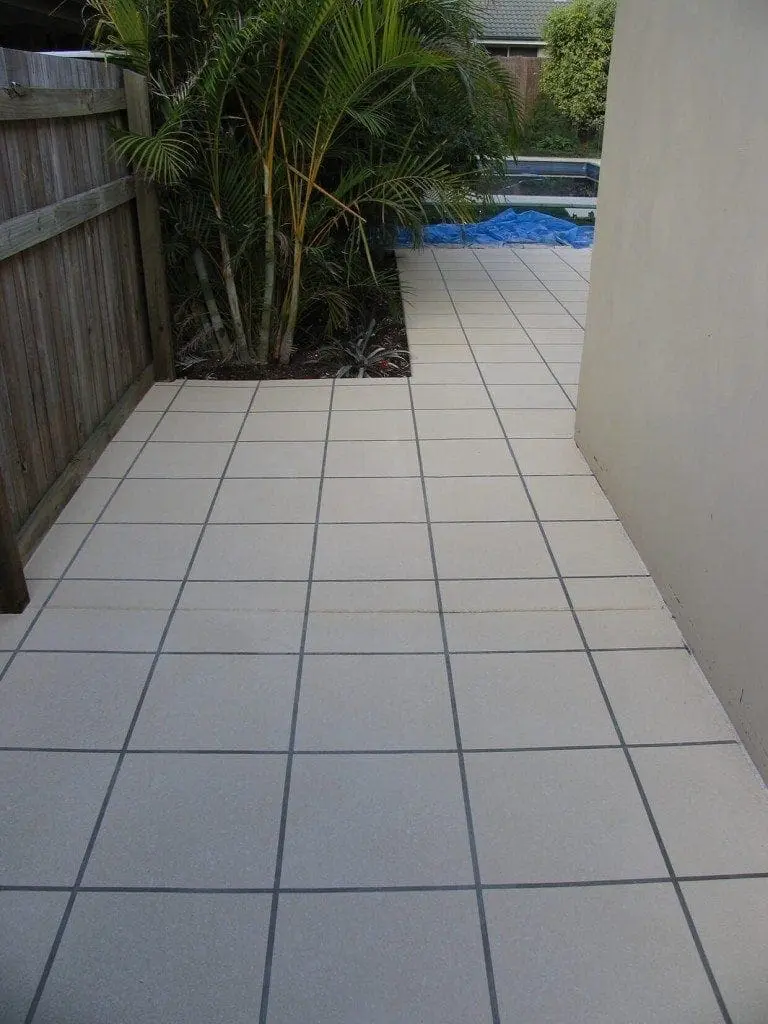
Concrete Footpaths & Pathways
Get around the house without the mud.
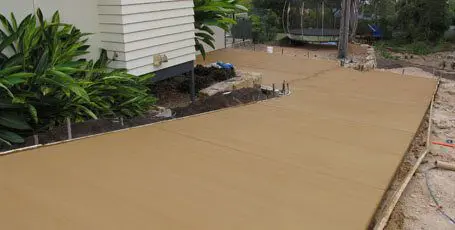
Side paths, garden walkways, bin access and council footpaths — we pour pathways that are level, well-drained and safe to walk on. Clean edges and properly spaced joints keep them looking sharp for years.
Often chosen with concrete steps, concrete ramps, plain concrete.
Typical job: 1–3 days · Site measure: free
What’s included
- Set-out of path route and widths
- Excavation and compacted base
- Edge forms, steel and falls
- Non-slip broom or exposed finish
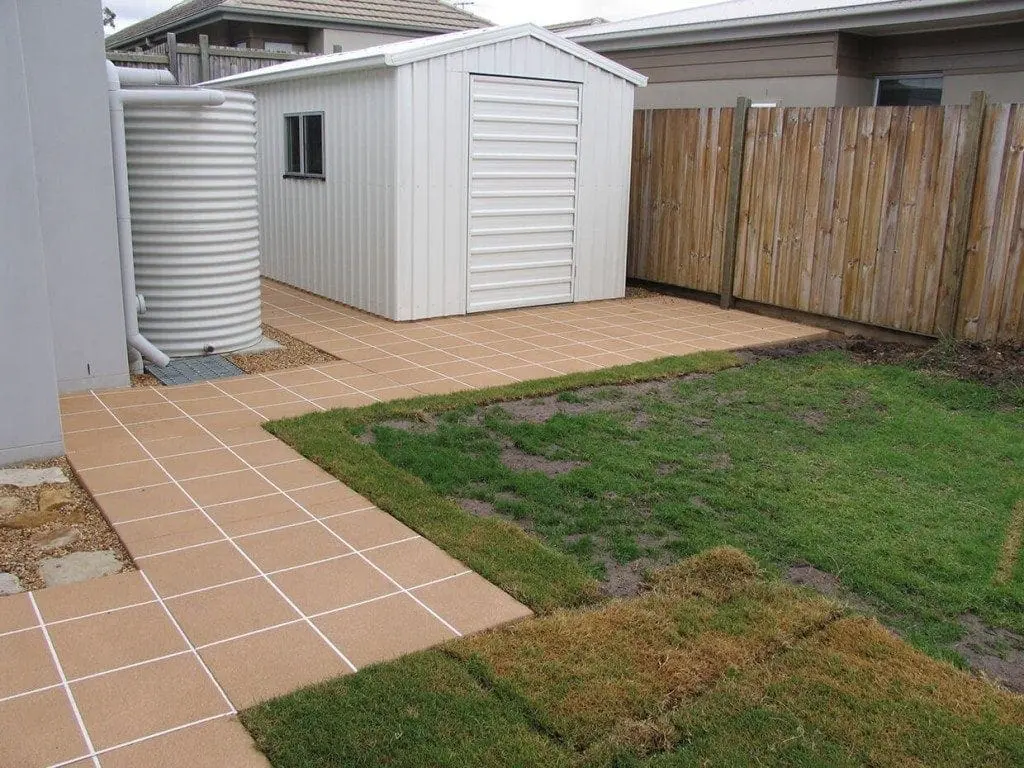
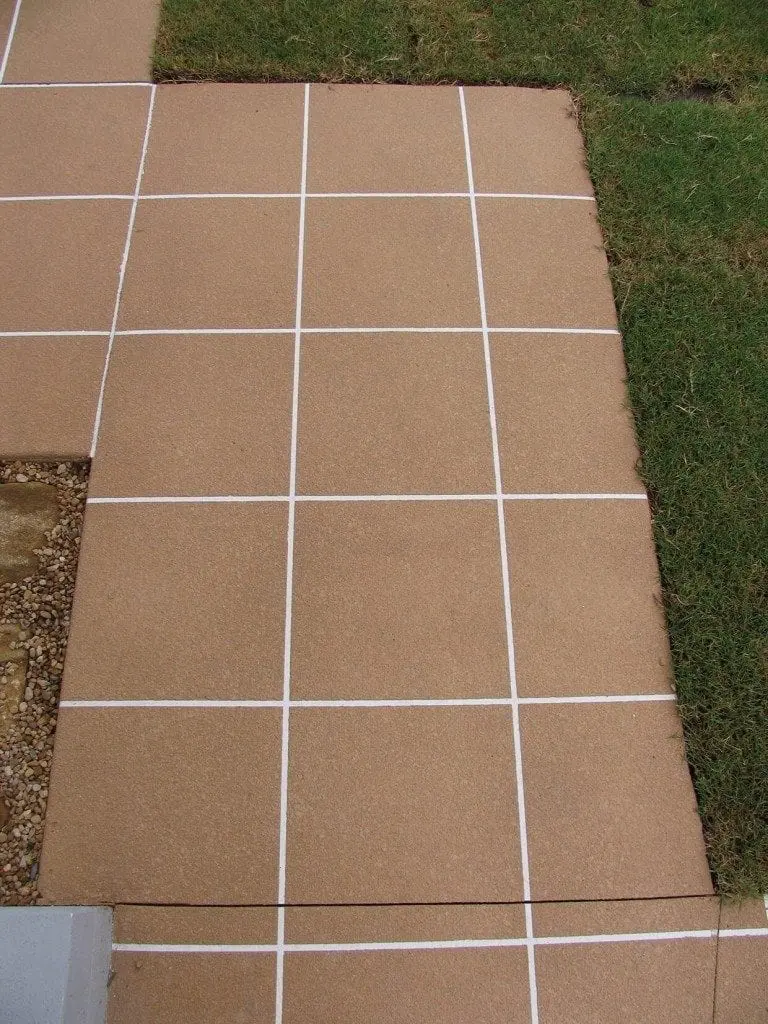
- Saw-cut joints every 1.5–2 m
Finish options
- Side paths — Narrow access paths that keep mud out of the house.
- Garden walkways — Curved or straight paths that frame the garden.
- Council footpaths — Verge paths poured to the council’s standard drawings and widths.
Specification
| Thickness | 75–100 mm |
|---|---|
| Width | 900 mm minimum recommended |
| Finish | Broom, exposed or honed |
| Joints | Saw-cut at 1.5–2 m spacings |
What affects the price
Every job is priced after a free site measure. Your fixed, itemised written quote shows each of these:
- Path length, width and number of curves
- Steps or level changes along the route
- Tree roots and drainage on side paths
- Council verge permits for public footpaths
Guide: Driveway crossovers on the Gold Coast
Concrete Footpaths & Pathways questions, answered
How wide should a side path be?
We recommend at least 900 mm so you can wheel a bin or mower comfortably. Where space allows, 1–1.2 m is more comfortable.
Can you pour a path with a curve?
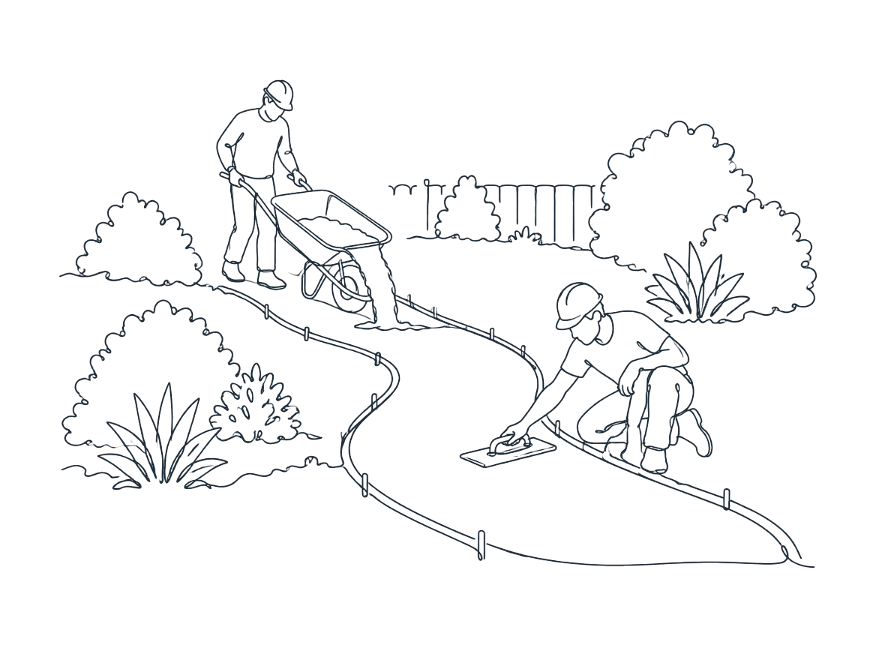
Yes. Curved and meandering paths are formed with flexible edging and look great in exposed or coloured finishes.
What is the best finish for a path in the shade?
Shaded paths grow moss and become slippery. A broom or exposed aggregate finish with a penetrating sealer gives the most grip and is easy to keep clean with a pressure washer.
Can a path go over tree roots?
Small roots can be bridged with thicker concrete and extra steel. Large roots should be checked by an arborist first, because cutting them can harm the tree and they may lift the path later.
Do side paths need drainage?
Usually, yes. Side paths often sit between a house and a fence where water collects. We fall the path away from the house and add drainage at low points so it doesn’t pond against the slab.
Get a fixed written quote
Call 0404 859 045 or request a free site measure.