Comparison · Decorative & outdoor finishes
Stencil vs stamped concrete
By Nathan Carter, owner, Gold Coast Concrete Services. Reviewed October 2026.
Quick answer
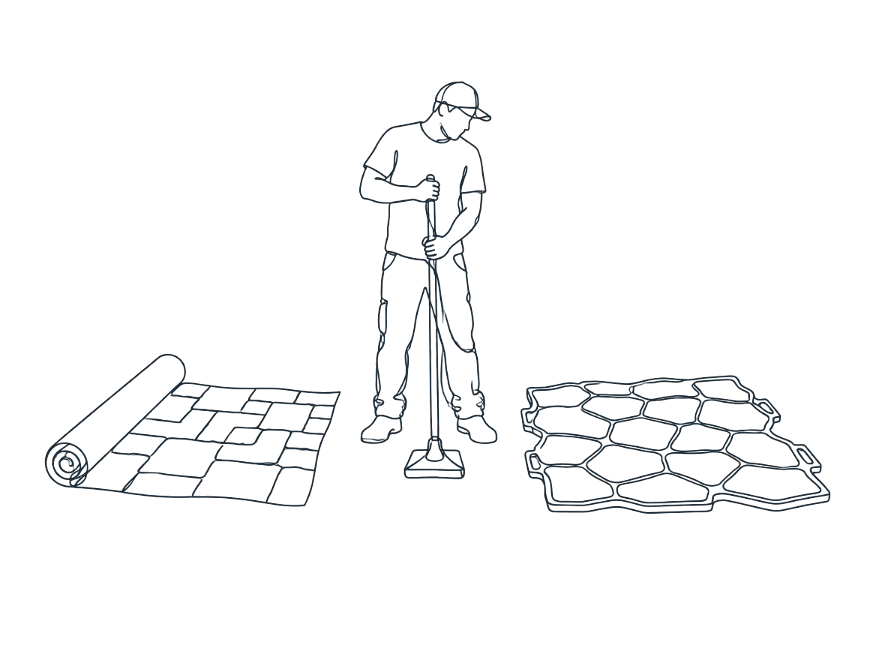
Stencil concrete uses paper stencils and a coloured surface layer to create flat tile, brick or stone patterns. Stamped concrete uses rubber mats pressed into fresh concrete to create a 3D texture such as slate, cobblestone or timber. Stencil is smoother and easier to clean; stamped looks more like natural material.
| Stencil | Stamped | |
|---|---|---|
| Surface | Flat pattern with grout lines | Textured, 3D relief |
| Patterns | Tile, brick, herringbone, random stone | Slate, cobble, ashlar, timber boards |
| Cleaning | Easy — smooth surface | Texture can hold dirt and leaves |
| Driveways | Very suitable | Suitable with smoother patterns |
| Overlay option | Yes, as a spray-on stencil resurfacing | Limited — needs fresh concrete |
| Resealing | Every 2–3 years | Every 2–3 years |
How stencil concrete is made
After the concrete is poured and levelled, paper stencils are laid on the wet surface in the chosen pattern. A coloured topping is spread over the top and floated in. When the stencils are peeled away, the grey concrete underneath shows through as grout lines.
The same look can be applied to existing concrete as a spray-on stencil resurfacing, which is popular for refreshing older driveways and patios.
How stamped concrete is made
Stamped concrete is coloured, then a release agent is applied and textured rubber mats are pressed into the surface while it is still workable. The mats leave the shape and texture of slate, cobbles, stone or timber boards.
Stamping has to happen in a short window as the concrete firms up, so it takes an experienced crew and good planning on the day.
Look and feel
Stencil gives a crisp, flat pattern that reads like tiles or pavers from a distance. Stamped concrete has real relief you can feel underfoot, so it looks more like natural stone or timber up close, especially with two-tone colouring.
Cleaning and upkeep
Stencil’s smooth surface sweeps and hoses clean easily, which suits driveways under trees. Stamped textures can trap leaves and dirt in the grooves.
Both finishes should be resealed every two to three years. Sealing keeps the colour strong and protects against oil, tannin and UV fading.
Which should you choose?
Pick stencil for driveways and busy areas where you want a neat, easy-clean pattern, or to refresh existing concrete. Pick stamped for alfresco areas, pool decks and garden paths where a natural stone or timber texture matters more.
Common questions
Which lasts longer?
Both last for many years when the slab is built properly and resealed regularly. Wear shows first on high-traffic driveway areas, so resealing matters more than the pattern type.
Is stamped concrete slippery?
Stamped concrete has texture, but a glossy sealer can make it slippery when wet. We add an anti-slip additive to the sealer for paths and pool areas.
Can I choose my own colours?
Yes. Both finishes come in a range of base and highlight colours. We bring samples to the site measure.
Can stamped concrete go over an old slab?
Not easily, because stamping needs fresh concrete. For existing slabs, a spray-on or stencil resurfacing is usually the better option.
More on decorative & outdoor finishes
- The best non-slip concrete finish for a pool surround
- How to clean and reseal decorative concrete
- Decorative Concrete